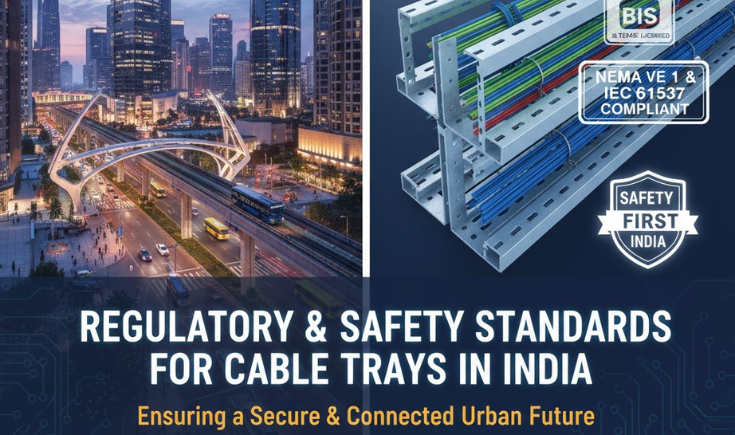
Regulatory & Safety Standards for Cable Trays in India
18 November 2025 || By: Admin
Cable trays are essential for organized, safe, and efficient cable management across industrial,
commercial, and residential setups. In India, their installation is governed by several standards
that ensure electrical safety, fire protection, and long-term reliability. Here’s a quick
guide to the key regulatory and safety requirements you should know.
Why Standards Matter
Following proper standards helps prevent:
- Electrical fires
- Short circuits
- Cable overheating
- Mechanical damage
- EMI/Signal interference
Safe installations also ensure compliance during inspections and audits.
Key Standards for Cable Trays in India
1. IS 10702 - Indian Standard for Metal Cable Trays
This is the main standard for cable trays in India. It covers:
- Material and corrosion protection
- Mechanical strength
- Load capacity
- Installation guidelines
2. National Electrical Code (NEC 2023) – BIS
The NEC provides detailed requirements for:
- Cable routing
- Safe clearances
- Fire safety
- Earthing and bonding
- Tray support spacing
3. IEC & NEMA Standards (for global and industrial compliance)
These international standards are often applied in large-scale industrial (e.g., Oil & Gas, Power Plants) and EPC projects:
- IEC 61537 – Cable tray and ladder system requirements
- IEC 60364 – Building electrical installation guidelines
- NEMA VE 1 & VE 2 – Standards popular for corrosion resistance, strength, and installation.
These standards focus on corrosion resistance, strength, electrical safety, and proper installation methods.
Safety Requirements for Installation
1. Material Selection
Choose based on environment:
- Hot-dip galvanized or powder-coated steel: For general use.
- Stainless steel / FRP (Fiber Reinforced Plastic): For corrosive or chemical environments.
- Aluminium: For lightweight, corrosion-resistant applications.
2. Load & Support
- Follow standard tray loading limits.
- Maintain proper support spacing (typically 1.2–1.8 meters).
- Avoid overloading the tray system.
3. Fire Safety
- Use fire-resistant cables in critical areas.
- Maintain strict cable segregation.
- Follow National Building Code fire norms.
4. Earthing & Electrical Continuity
- Metallic trays must be properly earthed to prevent shock hazards.
- Ensure low-impedance grounding and electrical continuity throughout the system.
5. Routing & Segregation
- Separate power, control, and communication cables as required.
- Avoid mixing high and low voltage cables within the same tray without approved barriers.
Final Thoughts
Cable trays may seem simple, but they are a critical part of electrical safety. By following IS 10702, NEC guidelines, and relevant IEC/NEMA standards, you ensure safer installations, reduced risk, and long-term reliability for your entire electrical system.