Role of Solar Mounting Channels in High-Wind & Coastal Solar Projects
05 January 2026 || By: Admin
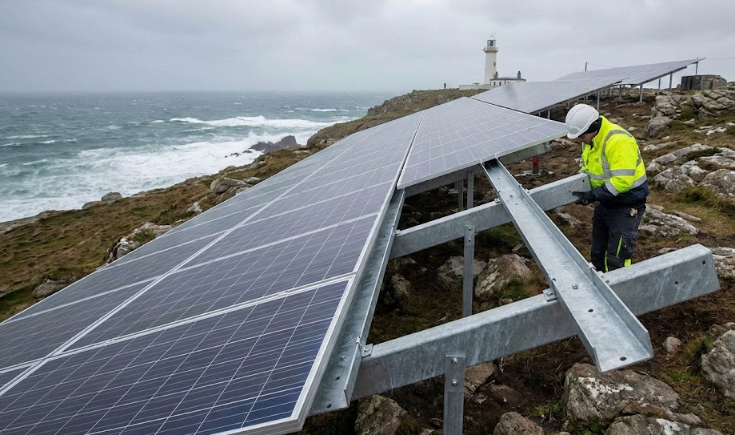
As solar installations expand into coastal regions and high-wind zones, the importance of robust solar mounting structures has never been greater. Among all structural components, solar mounting channels play a critical role in ensuring system stability, durability, and long-term performance under extreme environmental conditions.
In this blog, we explore the role of solar mounting channels in high-wind and coastal solar projects, the challenges involved, and how choosing the right mounting channel can protect your solar investment for 25+ years.
Why High-Wind & Coastal Solar Projects Need Specialized Mounting Channels
Solar projects in coastal and cyclone-prone areas face unique challenges, including:
- High wind speeds: Significant uplift forces that can destabilize structures.
- Salt-laden air: Causes rapid corrosion if materials are not treated.
- High humidity: Constant moisture exposure accelerates rust.
- Frequent storms: Increased mechanical stress on the framework.
Standard mounting structures may fail under these conditions if solar mounting channels are not designed and treated properly.
What Are Solar Mounting Channels?
Solar mounting channels are cold-formed steel or aluminum structural sections used to support and secure solar panels in rooftop and ground-mounted systems. These channels form the backbone of the entire solar mounting structure.
Common materials include:
- Hot-Dip Galvanized (HDG) Steel
- Pre-Galvanized (GI) Steel
- Aluminum Alloy
For high-wind and coastal solar projects, material selection and coating quality are crucial.
Key Role of Solar Mounting Channels in High-Wind Zones
1. Structural Stability Against Wind Loads
In high-wind regions, solar panels are subjected to wind uplift, lateral pressure, and vibrational stress. High-strength solar mounting channels help to:
- Distribute wind loads evenly across the structure.
- Reduce structural deformation during gusts.
- Prevent loosening of fasteners and clamps.
Properly designed channels ensure the system complies with wind load standards such as IS 875, ASCE 7, and IEC norms.
2. Resistance to Corrosion in Coastal Environments
Coastal areas expose solar structures to salt spray and high humidity. Hot-dip galvanized (HDG) solar mounting channels are essential here because they offer:
- Thicker zinc coating (80–100 microns).
- Superior corrosion resistance compared to pre-galvanized steel.
- Longer service life (25–30 years).
3. Enhanced Load-Bearing Capacity
High-wind zones require mounting channels with increased thickness and higher yield strength. Well-engineered channels can handle dynamic wind pressure, support heavier panel arrays, and maintain alignment during storms.
4. Secure Panel Fixation & Reduced System Failure
Mounting channels serve as the base for mid clamps, end clamps, and bracing members. In coastal and windy regions, poor-quality channels can lead to panel displacement or bolt failure. Using precision-engineered solar mounting channels significantly reduces these risks.
Best Types of Solar Mounting Channels for Coastal & High-Wind Areas
Hot-Dip Galvanized (HDG) Solar Mounting Channels
- Best choice for coastal projects.
- Excellent corrosion resistance and long lifespan.
- Higher initial cost, but lower lifecycle cost.
Aluminum Solar Mounting Channels
- Naturally corrosion resistant and lightweight.
- Suitable for rooftops with load restrictions.
Pre-Galvanized Channels (Limited Use)
- Thinner zinc coating.
- Generally suitable only for low-corrosion inland areas, not coastal zones.
Design Considerations for High-Wind Solar Mounting Channels
To ensure performance in extreme conditions, solar mounting channels should be designed with:
- Accurate wind load calculations.
- Proper tilt angle optimization.
- Adequate bracing and support spacing.
- Certified material thickness and coating.
Compliance with Standards & Certifications
High-wind and coastal solar projects should use mounting channels that comply with:
- IS 2062 / IS 808
- ASTM A123 (HDG coating)
- IEC 61215 & IEC 61730
- ISO 1461
Compliance ensures safety, durability, and bankability of solar projects.
Conclusion
The success of solar projects in high-wind and coastal regions depends heavily on the quality of solar mounting channels used. From resisting corrosion to withstanding extreme wind loads, these channels are the foundation of a safe and durable solar installation.
Investing in high-quality, certified solar mounting channels is not just a structural decision—it’s a long-term performance strategy.
FAQ: