On most Indian commercial and industrial projects, J-hooks have the lowest upfront material cost for light, low-voltage cable runs. Surface raceways (often called Wiremold, after the Legrand brand) suit short, visible runs in finished spaces. Cable tray usually costs more per metre to buy, but it costs less to install per cable once a route carries many cables, and it is clearly cheaper over the life of the building. The deciding factors are cable count, cable type, route length and how often the installation will change.
Cable tray vs J-hooks cost comparison: what the short answer leaves out
A fair cable tray vs J-hooks cost comparison looks at three numbers, not one: the material price, the installed cost (material plus supports plus labour), and the lifetime cost (additions, maintenance, rework and replacement). Purchase departments often compare only the first figure, which is why J-hooks and surface raceways look cheaper on paper than they turn out to be on site.
- J-hooks: lowest material cost, suited to a small number of data or low-voltage cables in ceiling voids. Cost per cable rises quickly as the cable count grows.
- Surface raceways and Wiremold: neat and enclosed, good for short runs on finished walls. Capacity is limited, and adding cables usually means adding raceway.
- Cable tray: higher material cost per metre, but one route carries power, control and data cables in bulk, with spare capacity for future additions.
What each system is designed to do
J-hooks are individual hangers fixed to the slab, a purlin or a drop rod at intervals, with cables draped between them. They are common in office structured cabling, and ANSI/TIA-569, the telecommunications pathways standard, recognises them as a pathway for low-voltage cable. They are not intended for heavy power or armoured cables.
Surface raceways are closed PVC or metal channels with a snap-on cover, fixed directly to walls or ceilings. They are mainly a finishing product for retrofits, cabins, shops and areas where cables cannot be concealed.
Cable trays are continuous support systems that carry cables along their full length. As a cable tray manufacturer in India since 2001, Hutaib Electricals produces perforated cable trays, ladder type cable trays, wire mesh basket cable trays and raceways from its Pune facility. If you are still deciding between these formats, our guide on comparing basket, ladder, solid bottom and wire mesh cable trays explains where each one fits.
Installed cost: material, supports and labour
J-hooks
Each hook is inexpensive, but each needs its own fixing point. On a long corridor, warehouse or plant route, that means a large number of anchors, drop rods and labour hours working at height. Cables must be pulled and dressed by hand at every hook, and a bundle cannot exceed the hook's capacity, so heavier routes need parallel lines of hooks. That doubles the fixing work and erodes the material saving.
Surface raceways
Material cost per metre is moderate, but labour is high on long runs. Every length has to be measured, cut, fixed, joined and covered, and every bend, tee and end cap needs a matching fitting. For a few metres inside a cabin this is acceptable. Across a factory floor or a commercial building, it becomes expensive and difficult to scale.
Cable tray
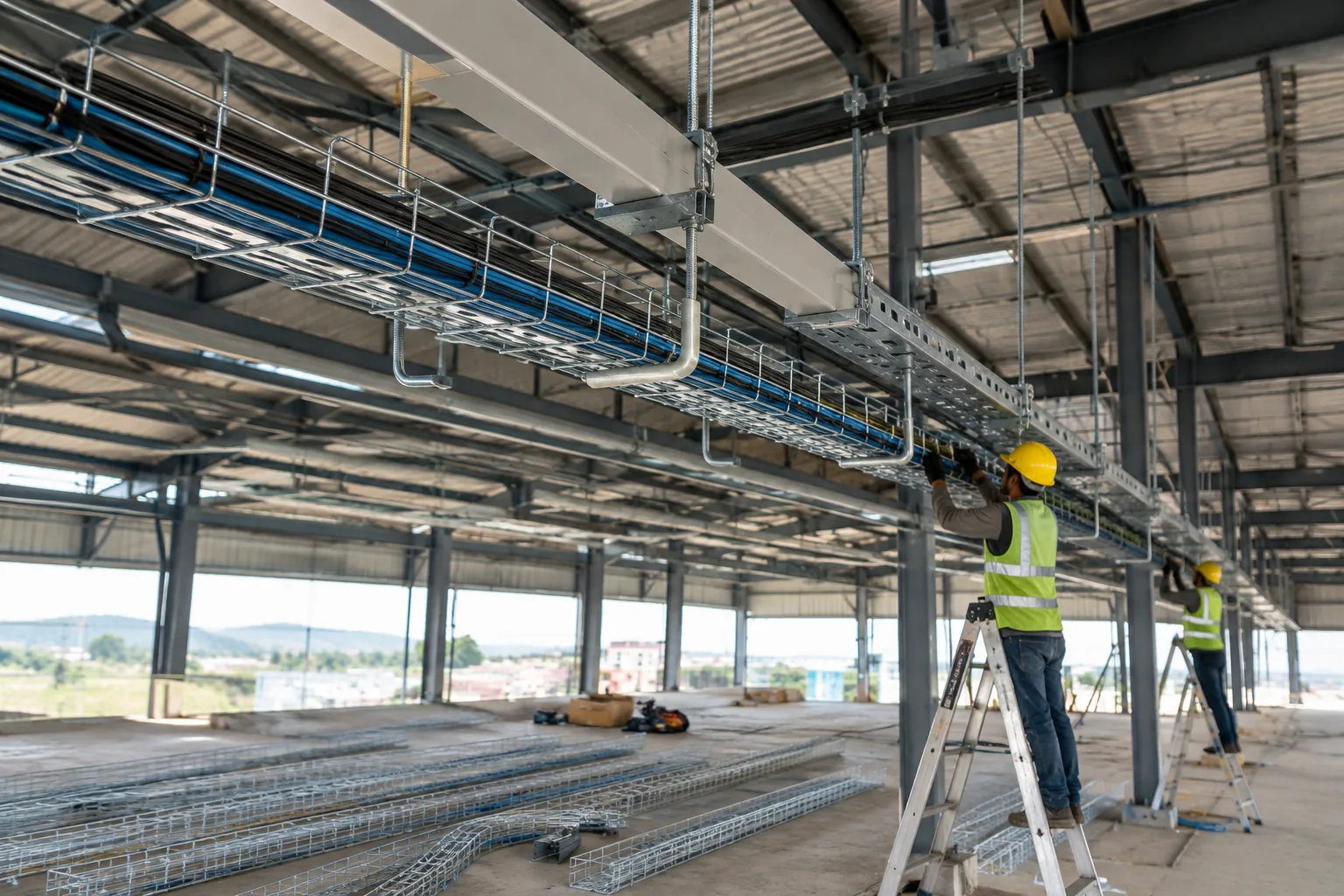
The cost of cable tray installation depends on tray type, width, material, thickness and finish, plus cable tray support systems (unistrut channels, brackets, threaded rods) and fittings. Because a single tray carries many cables, the installed cost per cable falls as the cable count rises, and this is the point where tray overtakes J-hooks. Design details also reduce site labour. Our trays use slotting patterns that allow cutting and joining at any point without drilling at site, and fittings are made in single-piece construction wherever possible, so there is less loose hardware and fewer joints to assemble. For data and light cable routes, a wire mesh basket cable tray designed for quick installation with accessories is often the most direct replacement for long lines of J-hooks.
Lifetime cost: where the comparison changes
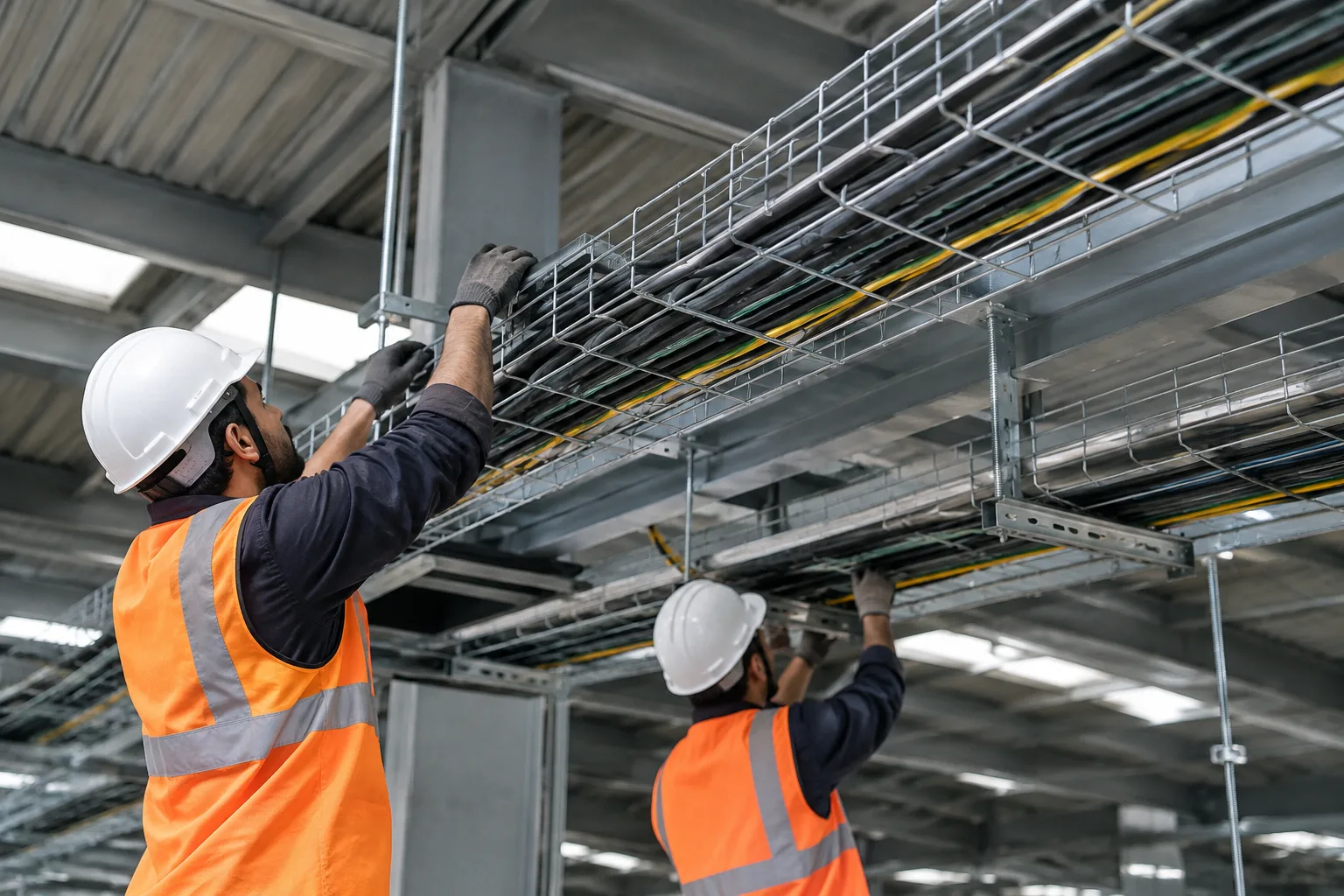
Most Indian industrial and commercial buildings go through repeated electrical changes: new machines, added IT load, rooftop solar, EV charging points and tenant fit-outs. Lifetime cost is driven by how each pathway handles those changes.
- Additions: a tray sized with spare capacity accepts new cables laid straight in. J-hooks often need a new hook line, and raceways need a new run or a larger section.
- Fault finding and replacement: open trays let maintenance teams trace and remove a damaged cable quickly. Enclosed raceways must be opened along the route.
- Heat and cable condition: cables bunched tightly on hooks or packed into small raceways get little airflow. Ventilated perforated, ladder and basket trays allow better heat dissipation, which matters for power cables.
- Sag and strain: cable spans between J-hooks put repeated strain on data cables over time. Continuous trays support the cable along its full length.
- Corrosion: pre-galvanised finish to IS-277 suits indoor, dry areas; hot dip galvanising to IS-2629 suits outdoor and humid locations such as coastal Mumbai; SS 304 or 316 suits chemical, food and pharma plants. The wrong finish shortens service life and adds replacement cost.
For office and data centre ceilings, it is also worth reading about the importance of installing a basket cable tray where cable counts are expected to grow.
Are cable trays cheaper than Wiremold?
For a short run of a few cables on a finished office wall, no. A surface raceway is usually simpler and cheaper there. Once the route is long, crosses open ceilings or service areas, or carries more than a handful of cables, cable tray becomes cheaper per cable installed, and it stays cheaper as the cable count grows. Many projects use both: trays for main routes through ceiling voids, shafts and plant areas, and raceways and trunking systems for the final drop to a workstation or panel.
Where conduit fits in the cost picture
The same logic applies to cable tray vs conduit cost. Conduit protects individual circuits well, but each circuit needs its own pipe, bends and draw boxes, and adding a circuit later often means a new conduit run. On multi-cable industrial routes, a tray typically needs fewer fittings and less pulling labour. We cover this in more detail in why cable trays are better than conduit systems.
How to keep the cost of cable tray installation under control
- Choose the tray type by cable: ladder type for heavy power cables and longer support spans, perforated for general power and control, wire mesh basket for data and light cables.
- Size for actual cable load plus spare capacity: undersizing forces a second route later; oversizing wastes material.
- Match support spacing to the tray's load rating: correct spacing avoids both sagging trays and unnecessary supports.
- Match the finish to the environment: do not specify stainless steel where a galvanised finish will perform, and do not use pre-galvanised trays outdoors.
- Order cable tray accessories and fittings with the trays: bends, tees, reducers and covers from one manufacturer fit first time.
- Consolidate quantities: grouping phases into one order helps, as explained in how bulk cable tray orders reduce project costs.
Getting a project-specific price
There is no single per-metre figure that holds across projects, because material, thickness and finish, route length and fittings all change the total. That is why we price against your BOQ and layout rather than a generic rate. As our engineering team puts it, "Selecting the right cable tray depends on cable load, installation environment, support spacing, material and required finish."
Hutaib Electricals supplies electrical contractors, EPC firms and procurement teams across Pune, Mumbai, the rest of India and export markets, with custom made cable trays built to project-specific requirements. Share your drawings, technical specifications and required quantities with our team to request a quotation.
Frequently asked questions
Are J-hooks cheaper than cable trays?
J-hooks have a lower material cost, so they are usually cheaper for a small number of low-voltage or data cables. As the cable count grows, extra hook lines, fixings and labour push the installed cost per cable above that of a tray. Over the building's life, trays are typically cheaper because new cables can be added without new pathways.
Can J-hooks be used for power cables on industrial projects?
J-hooks are intended for light low-voltage and data cabling, as recognised in ANSI/TIA-569 for telecommunications pathways. Heavy power, control and armoured cables need continuous support, which is why industrial projects use ladder or perforated cable trays for these routes.
What drives the cost of cable tray installation?
The main factors are tray type, width, material, thickness and finish, followed by supports, fittings and site labour. Slotting patterns that allow joining without drilling and single-piece fittings help reduce labour time on site. Correct sizing and support spacing avoid both rework and wasted material.
Which finish should I choose to keep lifetime cost low?
Pre-galvanised trays to IS-277 suit dry indoor areas, while hot dip galvanised trays to IS-2629 suit outdoor, humid and coastal locations. Stainless steel 304 or 316 is used for chemical, food and pharma environments. Matching the finish to the environment avoids early replacement.
Can Hutaib Electricals quote for a mixed tray and trunking system?
Yes. We manufacture perforated, ladder, wire mesh basket and raceway trays along with accessories, supports and custom sizes. Send your drawings, BOQ and quantities and our team will prepare a quotation for the complete system.