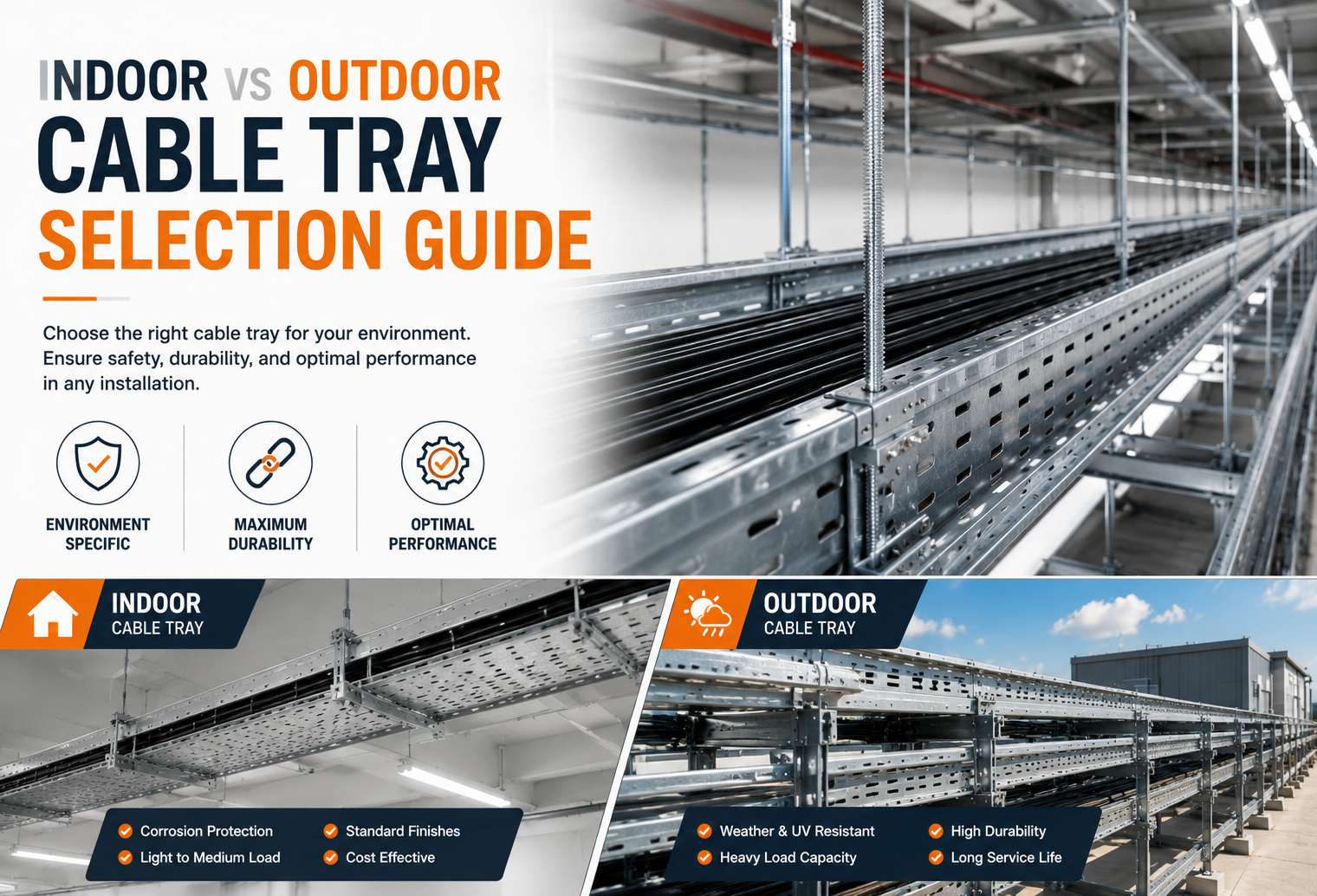
Indoor vs Outdoor Cable Tray Selection Guide
23 July || By: Admin
When planning an electrical infrastructure, selecting the correct cable management system is
paramount to the safety and efficiency of your setup. The environment in which your cables will be
routed—whether safely tucked indoors or exposed to the harsh elements outdoors—plays a major role in
determining the type of tray you need.
At Hutaib Electricals, we frequently consult with engineers and contractors on how to choose between
indoor and outdoor cable trays. While both serve the purpose of supporting and routing cables, their
design, material, and protective coatings differ significantly. Let’s dive into this selection
guide.
Understanding Indoor Cable Trays
Indoor environments are generally controlled spaces. Cables routed through office
buildings, shopping malls, data centers, or light-manufacturing facilities are protected from
extreme weather, UV radiation, and heavy moisture.
Because the environmental threat is lower, the focus for indoor cable trays shifts toward
aesthetics, space efficiency, and ease of access. Perforated cable trays and wire mesh
(basket) cable trays are incredibly popular for indoor use. They offer a clean look,
moderate load-bearing capability, and allow for easy routing of cables in tight spaces above
ceilings or under raised floors.
Material and Finish: For indoor applications, pre-galvanized steel (GI) or powder-coated
finishes are usually sufficient to prevent basic oxidation and blend in with interior aesthetics.
Understanding Outdoor Cable Trays
Outdoor installations are a different beast altogether. Power plants, solar farms,
petrochemical industries, and telecom towers are exposed to rain, snow, heavy winds, direct
sunlight, and wide temperature fluctuations.
Outdoor cable trays must be built for maximum durability and structural integrity. For these
applications, ladder-type cable trays are generally the preferred choice. Their open-rung
design prevents the accumulation of water, snow, and debris, while simultaneously offering the best
possible ventilation for high-voltage power cables prone to heating up.
Material and Finish: Standard steel will quickly rust outdoors. Therefore, Hot-Dip Galvanized
(HDG) steel, Stainless Steel (SS 304/316), or Fiberglass Reinforced Plastic (FRP/GRP) are mandatory.
HDG provides a thick zinc layer that withstands harsh weather, while FRP is highly recommended for
highly corrosive or chemical environments.
Key Factors for Selection
To simplify your decision-making process, consider these three critical factors:
1. Environmental Hazards: If the tray is exposed to rain or salt spray (coastal areas), opt
for Hot-Dip Galvanized or Stainless Steel ladder trays. For indoor, dry environments, pre-galvanized
perforated trays will do the job perfectly and save on costs.
2. Load Capacity and Cable Type: Heavy, thick power cables used in outdoor industrial plants
require the high load-bearing strength of ladder trays. Lighter telecom or networking cables used
indoors are perfectly suited for wire mesh or trunking systems.
3. Heat Dissipation: Cables generating significant heat need open air to cool down. Ladder
trays offer maximum airflow, making them strictly necessary for heavy outdoor power routing, whereas
enclosed trays can be used indoors for low-voltage routing.
Conclusion: Making the Right Investment
Selecting the wrong cable tray can lead to early structural failure, cable degradation, and
increased maintenance costs. By analyzing whether your project is indoor or outdoor, and
understanding the specific environmental demands of the site, you can choose a system that will last
for decades.
At Hutaib Electricals, we manufacture a
comprehensive range of both indoor and outdoor cable trays, including Perforated, Ladder, Wire Mesh,
and FRP Trays. If you need assistance selecting the perfect system for your upcoming project, our
technical team is ready to guide you. Contact us today to ensure your cable management system is
built to last!
Related searches
Merging Tray Cable with Automobile Technology | Use A Cable Tray For Avoiding Electrical & Fire Damages On Cables | cable tray market size share & industry analysis forecast 2019 2026 | Cable Tray: Safety Precautions And Maintenance | The Walkable Cable Tray System For Effective Supply Cable Protection |