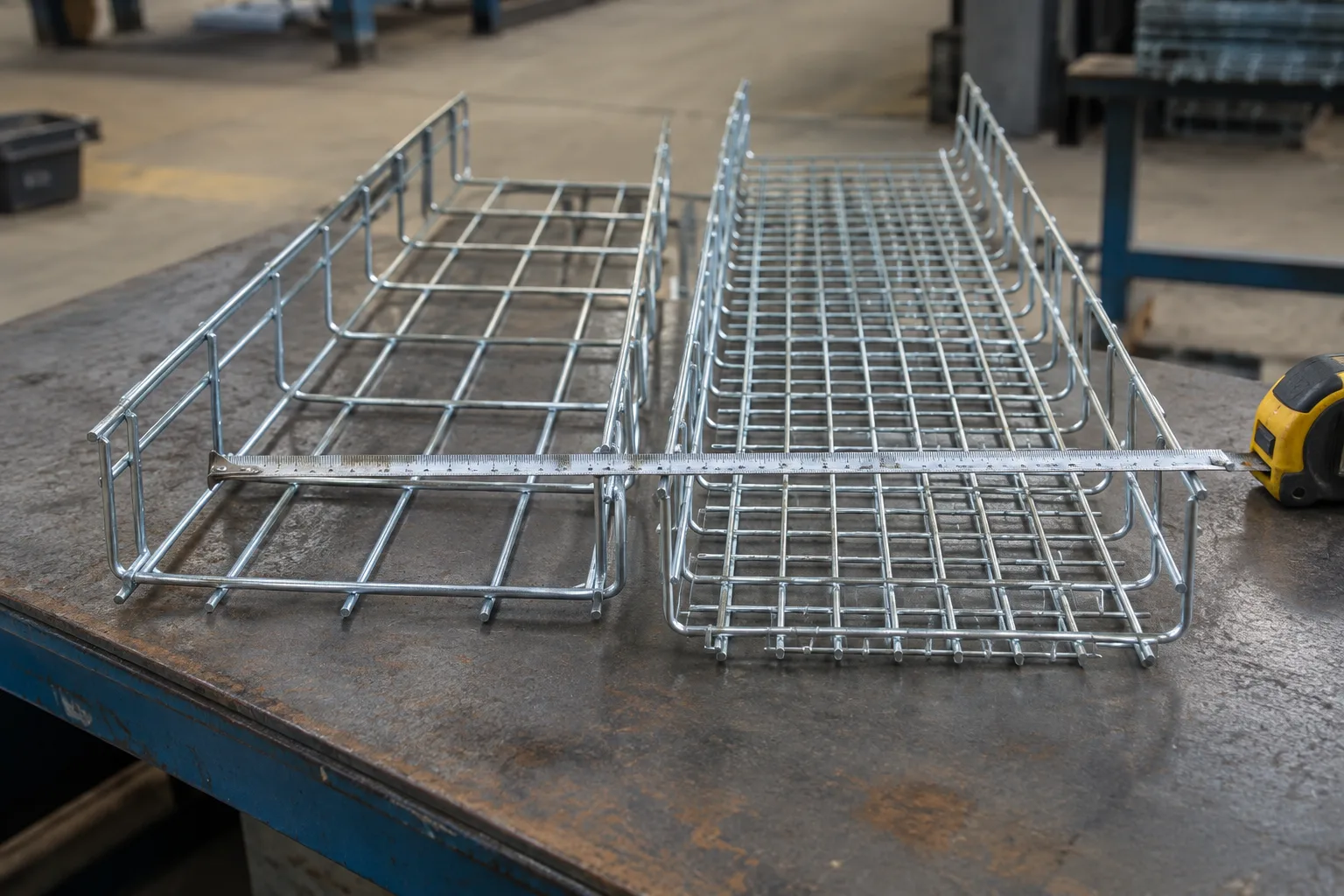
Wire mesh cable tray price is decided mainly by six things: wire diameter, tray width and side height, mesh pitch, finish, the accessories in your bill of materials and the order quantity. Steel content and finish drive most of the cost per metre, while fittings, couplers and supports often decide whether the total project figure stays within budget. Comparing quotations only on the rate per metre of straight tray usually gives a misleading picture.
As a Pune-based wire mesh cable tray manufacturer making cable management products since 2001, Hutaib Electricals prices basket trays for electrical contractors, EPC firms, MEP consultants and data centre projects. Below is how each factor affects cost, and what to include in your enquiry so that quotations from different suppliers can be compared on equal terms.
What Decides Wire Mesh Cable Tray Price
- Wire diameter: thicker wire means more steel per metre and a higher load capacity.
- Tray width and side height: larger sections use more wire and more welds.
- Mesh pitch: a closer grid adds wires and welding time.
- Finish: pre-galvanised, hot dip galvanised, powder coated or stainless steel.
- Accessories and supports: couplers, bonding connectors, brackets, hangers and covers.
- Quantity, customisation and delivery: standard sizes in bulk cost less per metre than small custom runs.
1. Wire Diameter and Tray Size
A basket tray is a welded grid of steel wires formed into a U-section. The diameter of the bottom and side wires is the first price driver, because it sets the weight of steel in every metre. Heavier wire carries more cable between supports, so it is the right choice for power cable runs in industrial plants, but it is unnecessary cost for light data and control cabling.
Width and side height work the same way. A 600 mm wide tray uses noticeably more wire than a 300 mm tray of the same height, and a taller side wall adds longitudinal wires along the full length. Selecting the right size depends on actual cable load, cable diameter, fill and spare capacity for future circuits. Oversizing every run "just in case" is one of the most common reasons a basket tray budget overshoots. Our wire mesh basket cable tray range lists the published widths, heights and thicknesses so you can match the section to the load rather than guess.
2. Mesh Pitch and Construction
Mesh pitch is the spacing between the longitudinal and cross wires. A grid of 50 x 100 mm is a widely used pattern in the industry, and it supports most cable sizes while keeping the tray light and open for ventilation. A closer pitch means more wires and more weld points per metre, which raises both material and fabrication cost. It is worth paying for only where small, flexible cables would otherwise sag between wires.
Construction quality also affects price, even if it does not show on the quotation. Consistent weld strength, straight and square sections, and edge wires finished so they do not cut cable insulation all take controlled fabrication. A well-made tray can be cut and joined at any point on site without distortion, which saves installation hours that never appear in the material rate.
3. Finish: The Biggest Single Swing in Price
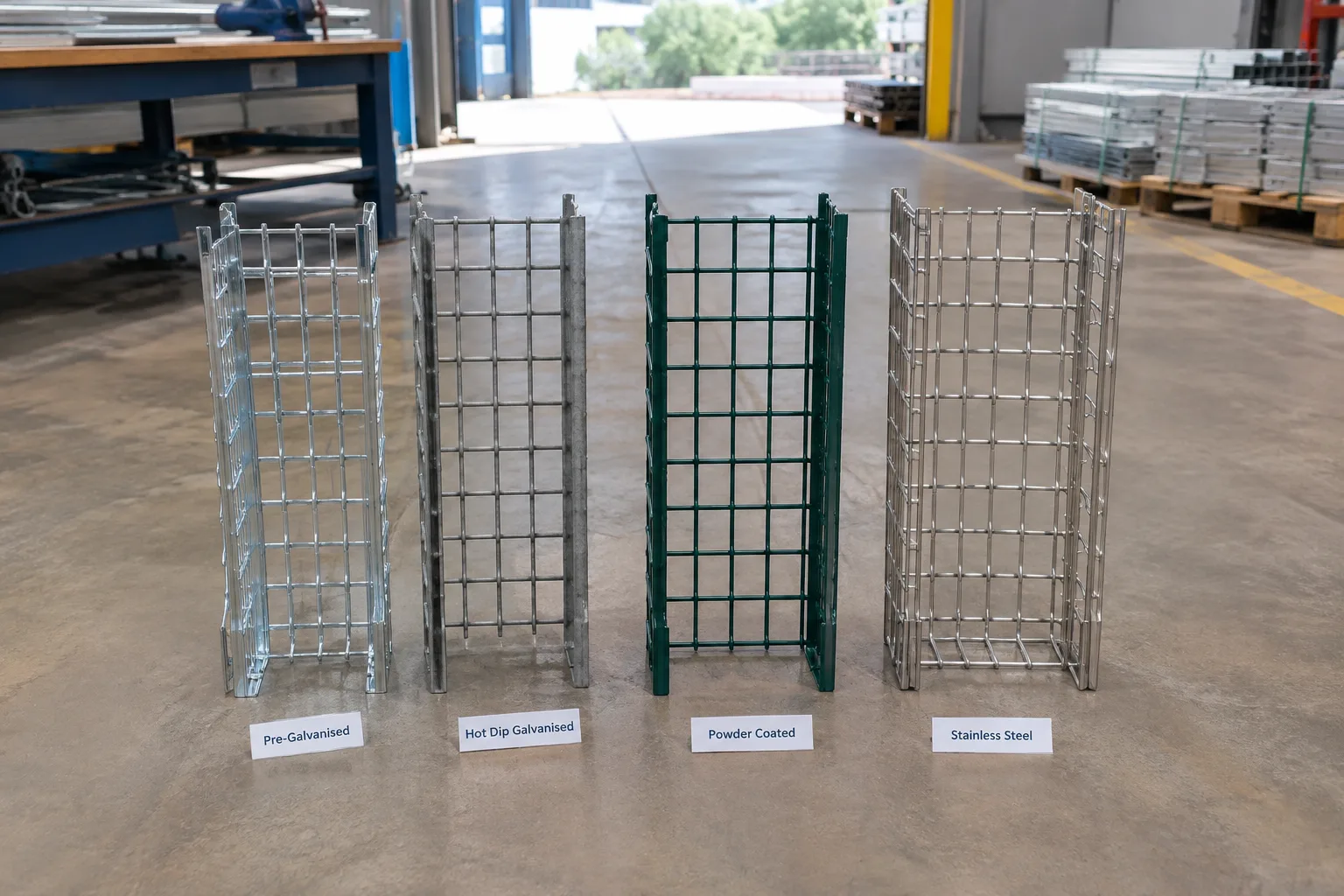
For the same tray size, the finish can change the price more than any other factor. The finish should be chosen by environment, not by habit. Hutaib Electricals offers the following finishes across its cable tray range:
- Pre-galvanised to IS-277: the economical option for dry, indoor areas such as offices, IT floors and warehouses.
- Hot dip galvanised to IS-2629: IS-2629 is the Indian recommended practice for hot dip galvanising of iron and steel. Because the whole fabricated tray is dipped, the zinc also covers welds and cut wire ends. It costs more than pre-galvanised but suits outdoor, humid and semi-industrial locations, including coastal sites around Mumbai and Navi Mumbai.
- Powder coated or painted: used where trays are visible in commercial interiors or where colour coding separates services.
- Stainless steel SS 202, 304 and 316: the highest cost, specified for food and pharma plants, chemical areas and aggressive coastal exposure. SS 316 is generally chosen for the harshest conditions and is priced accordingly.
Specifying stainless steel for a dry indoor plant room wastes money, while specifying pre-galvanised for an outdoor run invites early replacement. Matching material, thickness and finish to the site is the most effective way to control lifecycle cost.
4. Accessories, Fittings and Supports
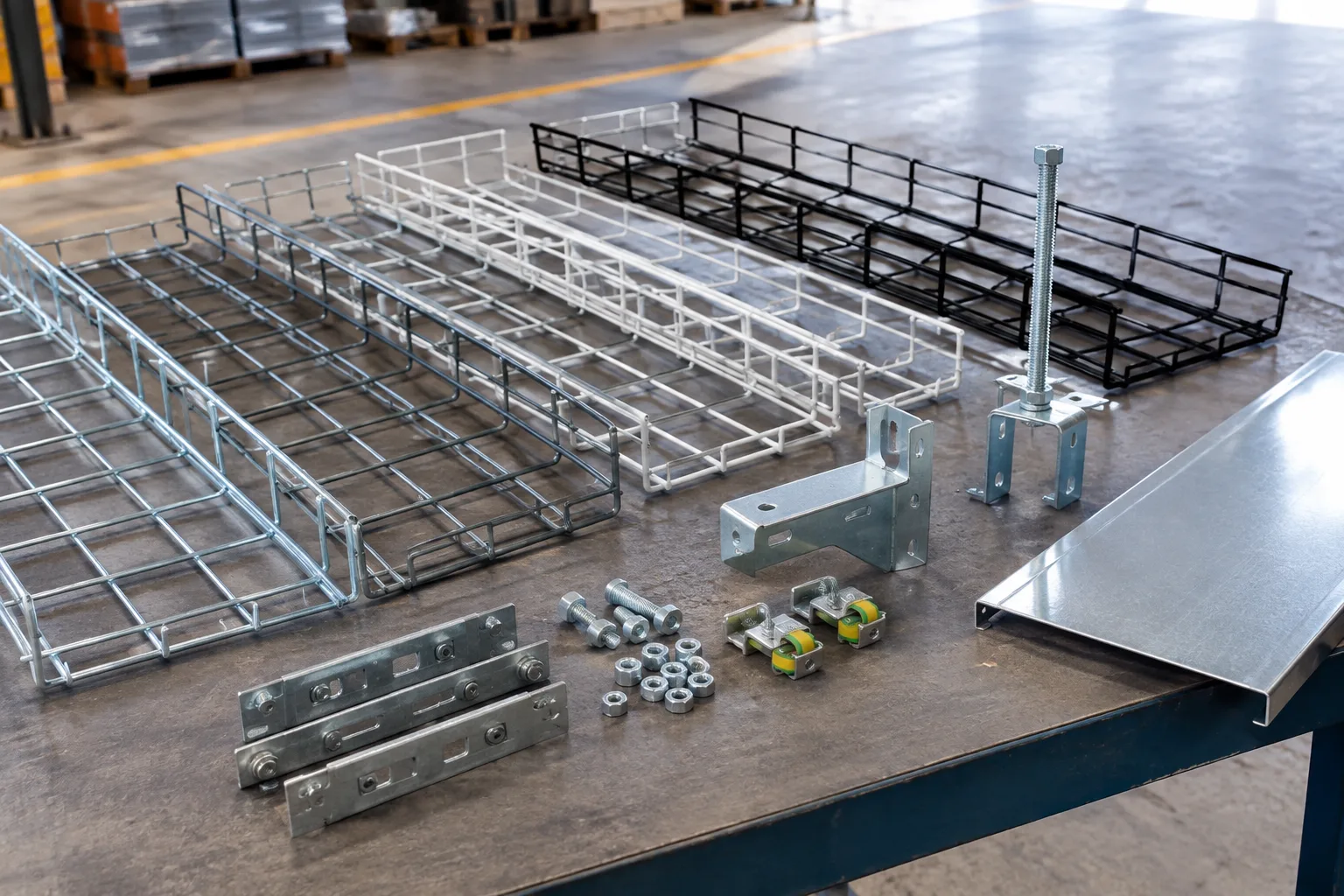
One practical advantage of basket trays is that many bends, tees and reducers can be formed on site by cutting wires and joining sections with couplers. This reduces the number of factory fittings compared with sheet metal trays. However, a complete system still needs splice couplers, nuts and bolts, earth continuity connectors, wall and ceiling brackets, threaded rod hangers and, in some areas, covers or dividers.
On projects with frequent changes in direction, accessories can form a significant share of the total order value. Some consultants also prefer factory-made bends for a neater finish in exposed areas. Ask every supplier to price the same fittings list, and check whether brackets and fasteners are included. Our cable tray accessories and fittings are made in single-piece construction wherever possible, which reduces loose parts and joints at site.
5. Quantity, Customisation and Delivery
Standard sizes in bulk quantities are the most economical, because production runs efficiently and material is bought in volume. Non-standard widths, special lengths, unusual mesh patterns or mixed finishes in small quantities carry setup time and are priced higher per metre. Custom made cable trays are still the right answer when a project layout demands them, and our in-house R&D develops trays around project-specific requirements.
Delivery location and packing also matter. Supply within Pune and Mumbai differs from pan-India dispatch to cities such as Bengaluru, and export orders to Dubai, Nepal, Bangladesh or Bhutan need packing suited to long transit.
Wire Mesh Cable Tray for Data Centres and Commercial Buildings
In data centres and IT parks, basket trays usually run overhead above racks, carrying structured cabling and fibre. These projects typically use lighter wire, pre-galvanised or powder coated finishes and a high number of drop-outs, dividers and junctions. The result is a modest rate per metre but a larger accessory component. Our guide to wire mesh cable trays for commercial buildings covers routing and sizing considerations for these environments in more detail.
Buying from Distributors or Direct from the Manufacturer
Many contractors first contact basket cable tray distributors in Pune for small, urgent quantities, and that works for standard stock items. For project quantities, buying direct from the manufacturer gives you control over wire diameter, finish, custom sizes and matching accessories from a single source, with manufacturing, quality control and packing handled under one roof. Our cable tray supply in Pune and across India serves both site-level and bulk cable tray requirements.
How to Get a Comparable Quotation
When you compare basket tray suppliers in Pune or elsewhere, send each one the same information:
- Tray width and side height for each run.
- Required wire diameter or the cable load the tray must carry.
- Mesh pitch, if your specification fixes one.
- Finish, with the applicable standard (for example, hot dip galvanised to IS-2629).
- Running metres per size.
- A fittings list with quantities: couplers, bends, tees, reducers, covers and bonding connectors.
- Support type and spacing, and whether brackets and hangers are in scope.
- Delivery location and required schedule.
If you are still deciding between tray types, our article on what decides perforated cable tray price per metre explains the equivalent factors for sheet metal trays, which helps when the choice is between basket and perforated.
Request a Quotation from Hutaib Electricals
Wire mesh cable tray price is never a single number. It is the result of wire diameter, size, mesh pitch, finish, accessories and quantity, and the cheapest rate per metre is not always the lowest installed cost. For bulk or custom basket tray orders, share your drawings, technical specifications and required quantities with our team to request a quotation, and we will price the complete system against your project-specific requirements.
Frequently asked questions
Why do two wire mesh cable tray quotations for the same size differ so much?
The difference usually comes from wire diameter, finish or what is included. One supplier may quote lighter wire or pre-galvanised finish while another quotes hot dip galvanised, or one may include couplers and brackets while the other does not. Send every supplier the same specification and fittings list to compare fairly.
Is hot dip galvanised or stainless steel basket tray worth the extra cost?
It depends on the environment. Hot dip galvanising to IS-2629 suits outdoor, humid and coastal sites because the zinc covers welds and cut ends after fabrication. Stainless steel SS 304 or 316 is justified in food, pharma, chemical and aggressive coastal areas, but is unnecessary for dry indoor runs.
Can you make wire mesh cable trays in non-standard sizes?
Yes. Hutaib Electricals manufactures custom made cable trays through in-house R&D based on project drawings and dimensions. Custom sizes in small quantities cost more per metre than standard sizes, so share your full quantities to get the most economical price.
Do you supply basket cable trays outside Pune?
Yes. We supply Pune, Mumbai, Navi Mumbai, Thane, the rest of Maharashtra and pan-India locations including Bengaluru. We also export to Dubai and the UAE, Nepal, Bangladesh and Bhutan.
What information do you need to quote a wire mesh cable tray project?
Send tray sizes, running metres per size, required finish, cable load or wire diameter, and a list of fittings and supports with quantities. Drawings or a BOQ help us quote the complete system accurately, including delivery location and schedule.